
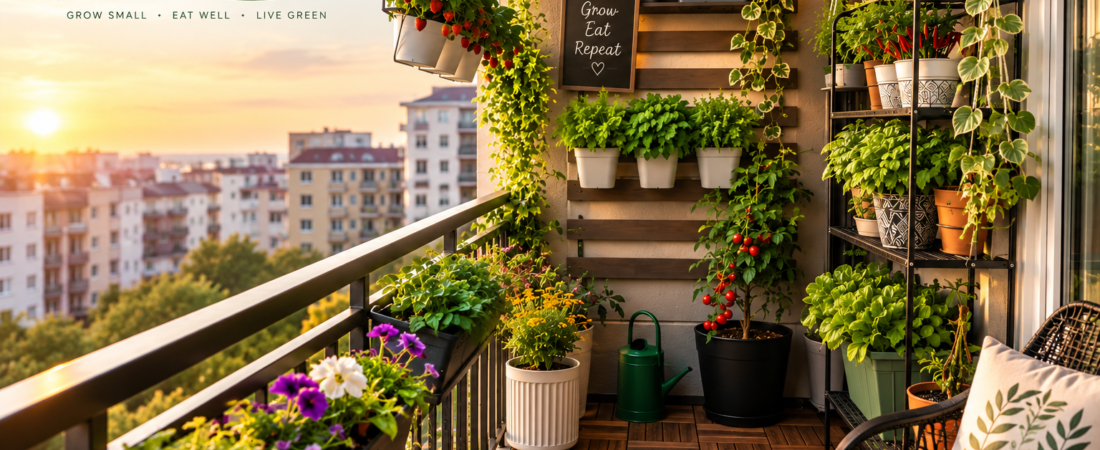
A tiny balcony may not look like much space, but with the right balcony garden ideas, it can become a surprisingly productive and beautiful garden.You don’t need dozens of large pots or a huge collection of plants. The key is to use vertical space, choose compact crops, and organize every corner with a purpose.
These balcony garden ideas can help you turn a small outdoor area into a beautiful growing space for herbs, vegetables, flowers, and even a few fruits.
1. Start by Measuring Your Balcony
Before buying containers or plants, take a few minutes to understand the space you have.
Measure the length and width of the balcony and pay attention to doors, railings, walking paths, and areas that need to remain clear.
You don’t want your garden to make the balcony difficult to use.
Smart tip: Sketch a simple layout on paper before purchasing anything. Planning first can prevent you from buying containers that don’t fit.
2. Find Your Sunniest Spots
Sunlight can vary dramatically even within a small balcony.
Spend a day observing which areas receive direct sunlight in the morning, afternoon, and evening. This will help you decide where different plants should go.
Place sun-loving vegetables such as tomatoes and peppers in brighter areas, while plants that tolerate less intense light can occupy other locations.
Smart tip: Don’t assume the entire balcony receives the same amount of sunlight.
3. Think Vertically
When floor space is limited, look upward.
Vertical shelves, wall-mounted planters, trellises, and hanging containers can give you additional growing space without taking over the floor.
Climbing plants such as beans and compact cucumbers can also make use of vertical supports. These balcony garden ideas are especially useful when floor space is limited.
Smart tip: Keep heavier containers lower and make sure anything mounted to a wall or railing is securely supported.
4. Use the Balcony Railing
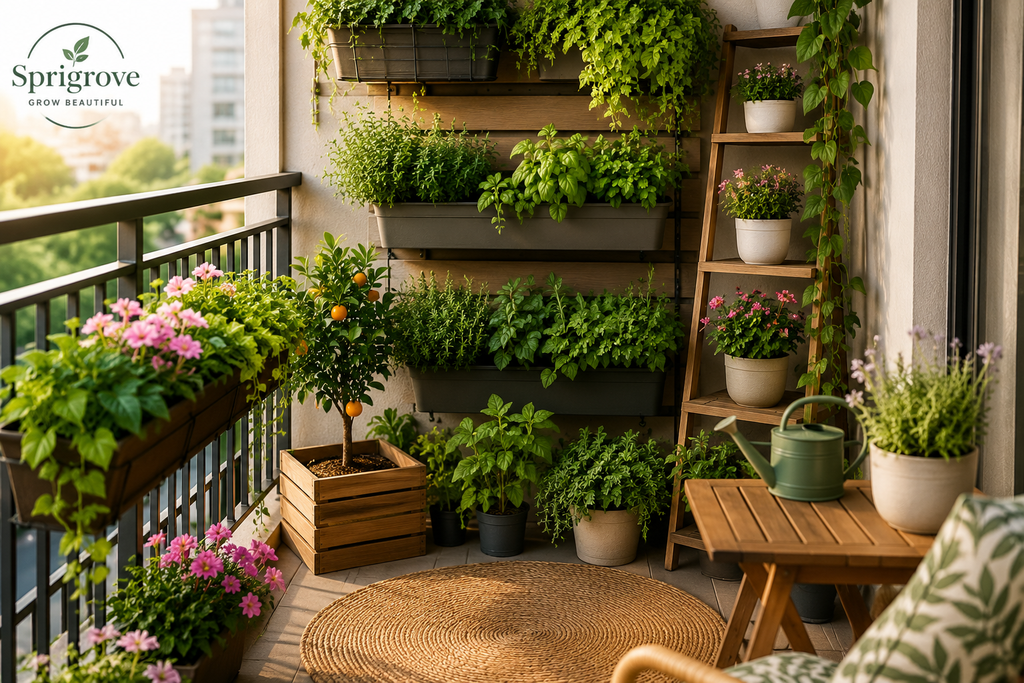
Your railing can become valuable gardening space.
Rail planters can hold herbs, flowers, lettuce, or other compact plants while keeping the floor clear.
However, safety should always come first. Containers should be properly secured and should not create a hazard for people below.
Smart tip: Choose lightweight containers when appropriate and check that they are firmly attached before adding soil and plants.
5. Add a Tiered Plant Stand
A tiered plant stand allows several containers to occupy the footprint of one or two larger pots.
Place shorter plants on the upper levels and taller plants where they won’t block sunlight from everything behind them.
This approach can make a small balcony look fuller without making it feel crowded.
Smart tip: Rotate containers occasionally if necessary so plants receive more even light.
6. Grow Herbs Within Easy Reach
A small balcony is perfect for creating a convenient herb garden.
Basil, mint, parsley, chives, thyme, oregano, and rosemary can all make useful additions to a container garden.
Keep frequently used herbs somewhere easy to reach, such as near the door or kitchen-facing side of the balcony.
Smart tip: Give aggressive growers such as mint their own container so they don’t compete with other herbs.
7. Choose Compact Vegetables
Not every vegetable needs a large garden bed.
Look for compact, dwarf, patio, or bush varieties when choosing plants for a small balcony.
Cherry tomatoes, peppers, lettuce, radishes, green onions, spinach, and compact beans can make practical choices depending on your available sunlight and container space.
Smart tip: Always check the mature size of a plant before buying it. A small seedling can become a surprisingly large plant.
8. Create Different Growing Zones
Instead of putting containers wherever there happens to be space, divide your balcony into simple zones.
One area can be dedicated to vegetables, another to herbs, and another to flowers or decorative plants.
You can also create a dedicated sunny zone for plants that need more direct light.
Smart tip: Group plants with similar watering and sunlight requirements together. This makes daily care easier.
9. Keep a Clear Walking Path
A productive garden should still be comfortable to use.
Avoid placing containers where you need to walk, open a door, or access windows and railings.
Leaving a clear path can make even a heavily planted balcony feel organized.
Smart tip: Use narrow shelves or vertical structures along walls instead of spreading containers across the entire floor.
10. Make Watering Easier
Small containers can dry out faster than plants growing in the ground, especially during hot or windy weather.
Instead of carrying a large watering can across the balcony every day, keep watering supplies nearby.
You can also group plants together so they are easier to check and water.
Smart tip: Check the soil before watering rather than watering automatically on a fixed schedule.
11. Add Flowers for Beauty and Pollinators
A productive balcony doesn’t have to look like a collection of vegetable pots.
Adding flowers can make the space more attractive while providing additional value to your garden.
Flowers can also help create a more inviting environment for pollinators when suitable plants are chosen.
Smart tip: Mix edible plants with flowering plants instead of separating everything into different areas.
12. Leave Room to Grow
One final mistake is filling every available space immediately.
Plants that look small when purchased can become much larger as they mature. Leave enough room for leaves, roots, supports, and harvesting.
A balcony garden should evolve as your plants grow.
Smart tip: Start with fewer containers than you think you need. You can always add more later.
A Simple Tiny Balcony Layout
You don’t need a complicated design to get started.
Try organizing your balcony like this:
Sunny railing: lettuce, herbs, peppers, or compact vegetables.
Wall or corner: vertical support for climbing plants.
Floor: a few larger containers for tomatoes or other bigger crops.
Shelving: small herb pots and seedlings.
Open area: keep a clear walking and working space.
This simple arrangement can make your garden easier to maintain while helping you use the available space efficiently.
Balcony Garden Ideas for a Beautiful Small Space
Productivity is important, but your balcony should also be somewhere you enjoy spending time.
Use containers with complementary shapes or materials, vary the height of your plants, and avoid placing everything in a straight line.
Combining edible plants with flowers and attractive foliage can make the garden feel more like a designed outdoor space rather than a collection of pots.
You don’t need expensive decorations. A thoughtful arrangement can make a bigger difference than buying more things.
Start Small and Build Over Time
The best balcony garden isn’t necessarily the one with the most plants.
Start with a few vegetables and herbs that you actually want to use. Learn how much sunlight your balcony receives, how quickly your containers dry out, and which plants perform best.
Once you understand your space, you can gradually expand.
Your first version doesn’t need to be perfect. A balcony garden becomes more productive as you learn what works.
Final Thoughts
A tiny balcony can become much more than an empty outdoor space.
With smart balcony garden ideas, you can use railings, walls, shelves, hanging containers, and carefully chosen plants to create a garden that is both productive and attractive.
The most important thing is to work with the space you have instead of trying to make it behave like a large backyard.
Start with a few containers, use vertical space, choose compact plants, and leave yourself enough room to enjoy the balcony.
With the right balcony garden ideas, even the smallest outdoor space can become productive.
Even a tiny garden can produce fresh herbs, vegetables, flowers, and a lot of satisfaction. 🌿