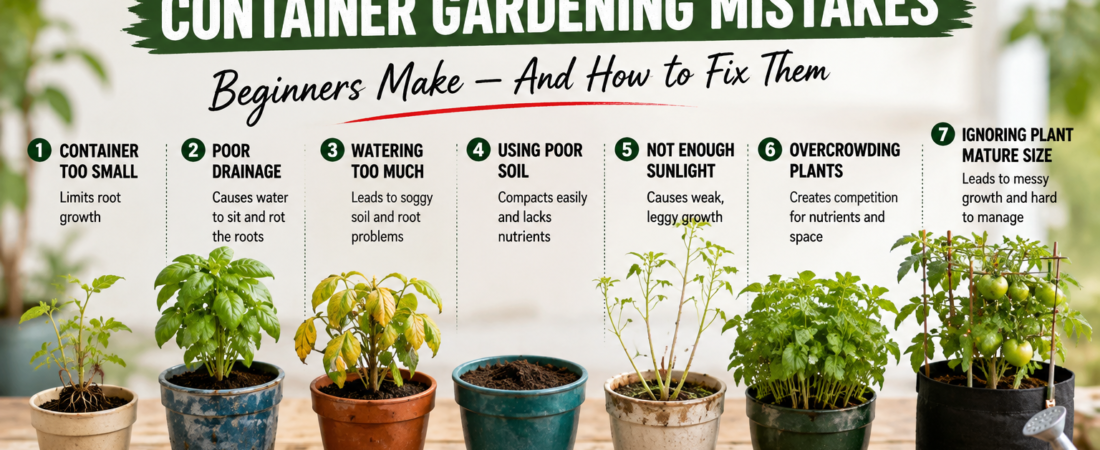
Container gardening looks simple at first, but container gardening mistakes can quickly lead to yellow leaves, weak growth, and unhealthy plants. Put a plant in a pot, add some soil, water it, and wait for it to grow.
But small mistakes can quickly lead to yellow leaves, weak growth, root problems, or plants that simply stop producing.
The good news is that most container gardening mistakes are easy to fix once you know what to look for. Whether you’re growing vegetables, herbs, or flowers, avoiding these common problems can make your container garden much healthier.
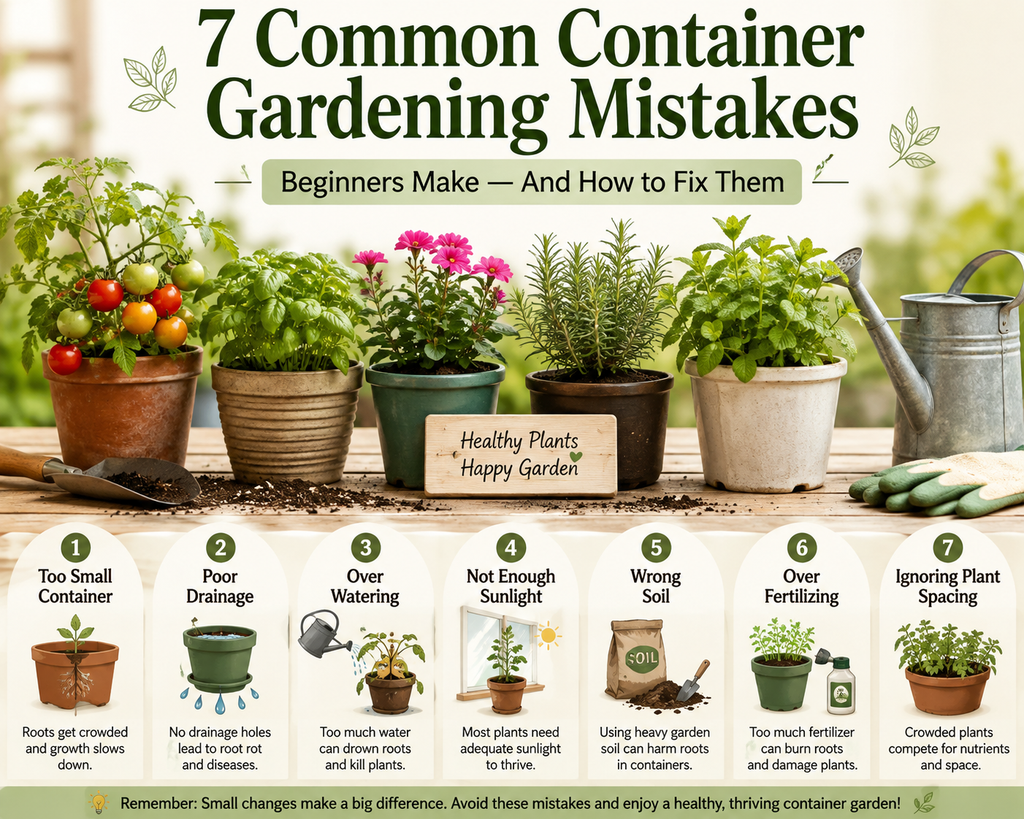
1. Choosing a Container That’s Too Small
One of the easiest mistakes to make is choosing a pot based on the plant’s current size instead of its mature size.
A small seedling may look perfectly comfortable in a tiny container, but its roots can quickly outgrow the available space.
When roots have nowhere to expand, plants may become stressed and growth can slow down.
How to fix it: Check the expected mature size of the plant before choosing a container. Give larger plants enough room for their roots to develop.
2. Forgetting About Drainage
A beautiful container isn’t useful if excess water has nowhere to go.
Without drainage holes, water can collect around the roots and create constantly wet soil. This can make it difficult for roots to get the air they need.
This is especially important when growing vegetables and herbs in containers.
How to fix it: Always choose containers with drainage holes. If you’re reusing a container, make sure water can escape freely from the bottom.
3. Watering Too Much
More water doesn’t always mean healthier plants.
Beginners often water their plants every day without checking whether the soil actually needs it. The result can be soggy soil and stressed roots.
On the other hand, allowing the soil to become completely dry for long periods can also cause problems.
How to fix it: Check the soil before watering. If the upper layer feels dry, it’s usually time to water. Adjust your routine depending on the plant, container size, weather, and location.
4. Using Poor-Quality Soil
Not all soil works equally well in containers.
Garden soil can become heavy and compacted when placed inside a pot. Poor drainage and compact soil can make it harder for roots to develop.
A good container growing medium should provide both moisture retention and drainage.
How to fix it: Use a quality potting mix designed for containers. Choose a mix that remains loose enough for roots to grow while still holding some moisture.
5. Not Giving Plants Enough Sunlight
A plant can have the perfect container and soil but still struggle if it doesn’t receive enough light.
Many vegetables and herbs need several hours of sunlight to grow strongly. Putting a sun-loving plant in a dark corner may result in weak, stretched growth and fewer harvests.
How to fix it: Observe your space before deciding where to place each container. Put plants with higher light requirements in the brightest suitable location.
6. Planting Too Many Plants in One Pot
It’s tempting to fit as many plants as possible into one container.
Unfortunately, overcrowding can create competition for water, nutrients, light, and root space. Plants may look impressive initially but become difficult to maintain as they mature.
Good airflow can also become harder to achieve when plants are packed together.
How to fix it: Follow the recommended spacing for the variety you’re growing. If seedlings become crowded, thin them early rather than waiting until they’re competing for space.
7. Ignoring How Large the Plant Will Become
Some plants start small but eventually become much larger.
Tomatoes, cucumbers, beans, and certain herbs can need support as they grow. If you don’t plan for that growth, containers can become messy or unstable.
A plant that outgrows its pot or support can also become difficult to move or maintain.
How to fix it: Think ahead. Choose the right container, leave enough room around the plant, and provide stakes, trellises, or other support when needed.
A Simple Container Gardening Check Before You Plant
Before putting a new plant into a container, ask yourself five quick questions:
Does the container have drainage holes?
Is the pot large enough for the mature plant?
Is the soil suitable for container growing?
Will the plant receive enough sunlight?
Will I be able to water and care for it regularly?
If the answer to all five is yes, you’re already avoiding many of the most common problems.
How to Avoid Common Container Gardening Mistakes
If a plant isn’t growing well, don’t immediately change everything.
Avoiding common container gardening mistakes can make it much easier to keep your plants healthy.
Start by looking at the basics: sunlight, watering, drainage, container size, and soil.
Making one adjustment at a time makes it easier to understand what your plant actually needs.
Container gardening becomes much easier when you start observing your plants rather than following a rigid watering or feeding schedule.
Final Thoughts
Container gardening doesn’t have to be complicated.
The most common problems usually come from a few basic issues: containers that are too small, poor drainage, excessive watering, unsuitable soil, insufficient sunlight, overcrowding, or failing to plan for plant growth.
Once you understand these mistakes, you can avoid many frustrating problems before they happen.
Start with a few containers, choose plants that match your available space, and give yourself time to learn. A successful container garden isn’t created in one day — it improves as you learn what works best in your own growing space. 🌱