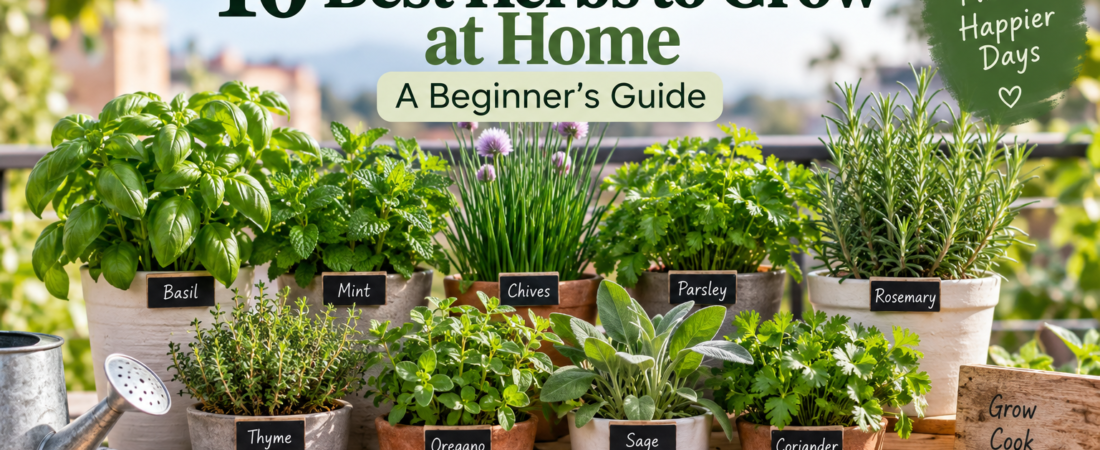
Growing fresh herbs at home is one of the easiest ways to start gardening. You don’t need a large backyard—even a balcony, patio, windowsill, or a few containers can provide enough space for a useful herb garden.
The best herbs to grow at home are generally easy to care for, don’t require much space, and can be harvested regularly for cooking.
Whether you’re completely new to gardening or simply want fresh herbs within easy reach, these ten options are great places to start.
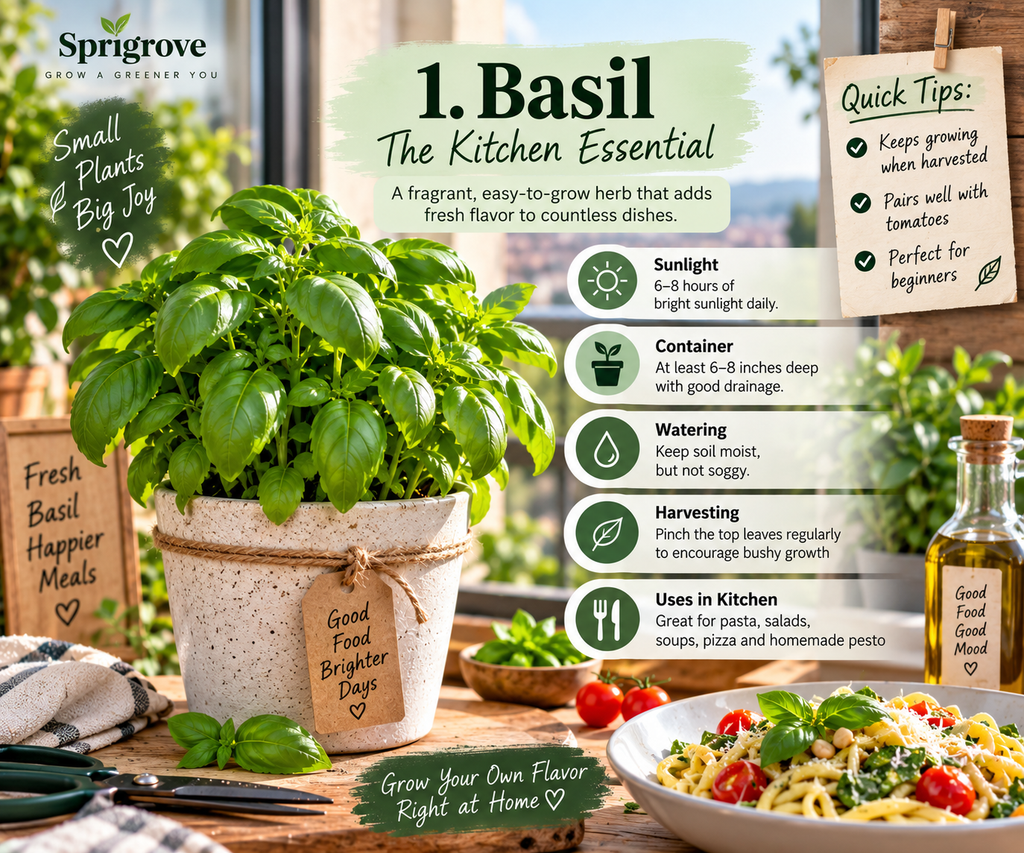
1. Basil
Basil is one of the most popular herbs for home gardens.
It grows quickly in warm conditions and works particularly well in containers. Basil prefers plenty of sunlight and consistently moist but well-drained soil.
Regularly harvesting the leaves can encourage the plant to produce more fresh growth.
Best for: Cooking, salads, sauces, and containers.
2. Mint
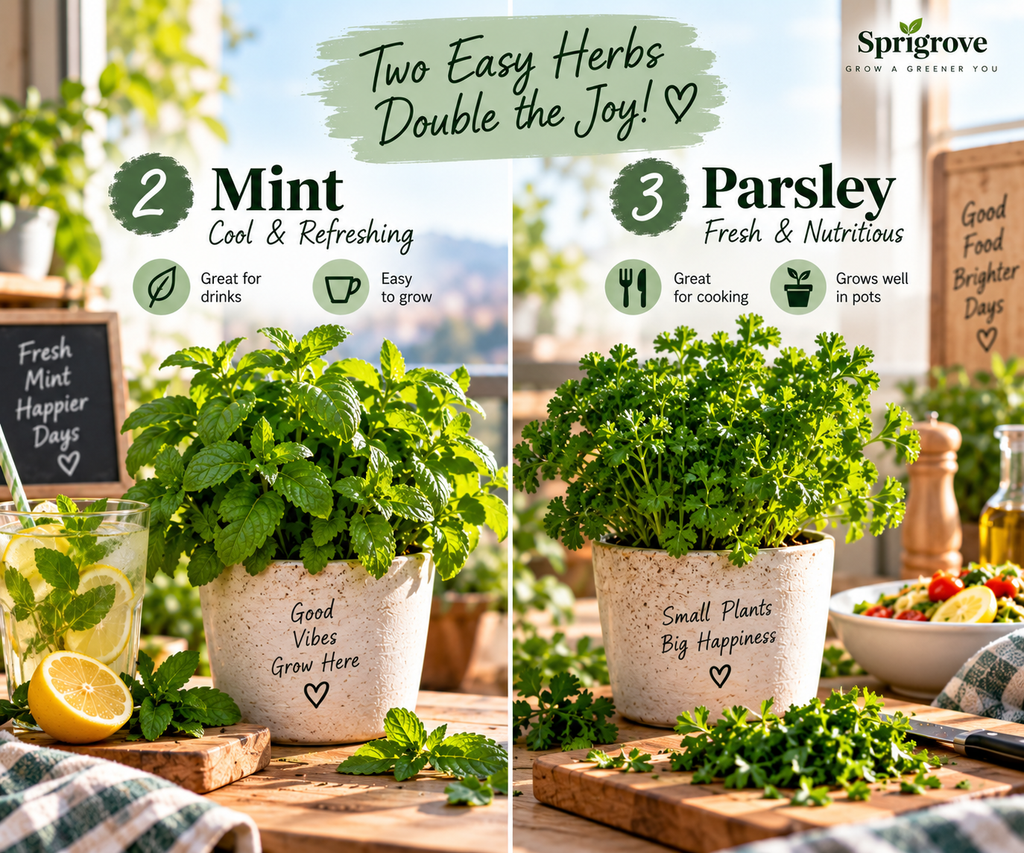
Mint is an excellent herb for beginners because it grows vigorously and can adapt to different growing conditions.
However, mint can spread aggressively when planted directly in the ground. Growing it in a container is often a better choice for small gardens.
Keep the soil moderately moist and provide bright light with some protection from intense heat when necessary.
Best for: Tea, drinks, desserts, and fresh garnishes.
3. Coriander
Coriander is a useful herb for many different cuisines and can be grown in containers or garden beds.
It prefers cooler growing conditions and can produce leaves relatively quickly from seed.
Because coriander can bolt in hot weather, planting it at the appropriate time for your climate is important.
Best for: Curries, chutneys, salads, and garnishes.
4. Parsley
Parsley is a productive herb that can provide fresh leaves over an extended period when properly cared for.
It can grow in containers and generally prefers a location with good light and well-drained soil.
Harvest the outer stems first rather than removing too much of the plant at once.
Best for: Soups, sauces, salads, and garnishing.
5. Chives
Chives are compact and particularly suitable for small gardens.
They produce thin green leaves and attractive flowers when allowed to bloom. Chives can grow well in containers and don’t require a large amount of space.
Harvest the leaves by cutting them close to the base when needed.
Best for: Eggs, salads, potatoes, soups, and garnishes.
6. Rosemary
Rosemary is a hardy herb with fragrant leaves and a strong flavor.
It prefers plenty of sunlight and well-drained soil. One of the biggest mistakes beginners make with rosemary is keeping the soil constantly wet.
Allow the growing medium to dry somewhat between waterings while still monitoring the plant during hot, dry weather.
Best for: Roasted vegetables, chicken, potatoes, and seasoning.
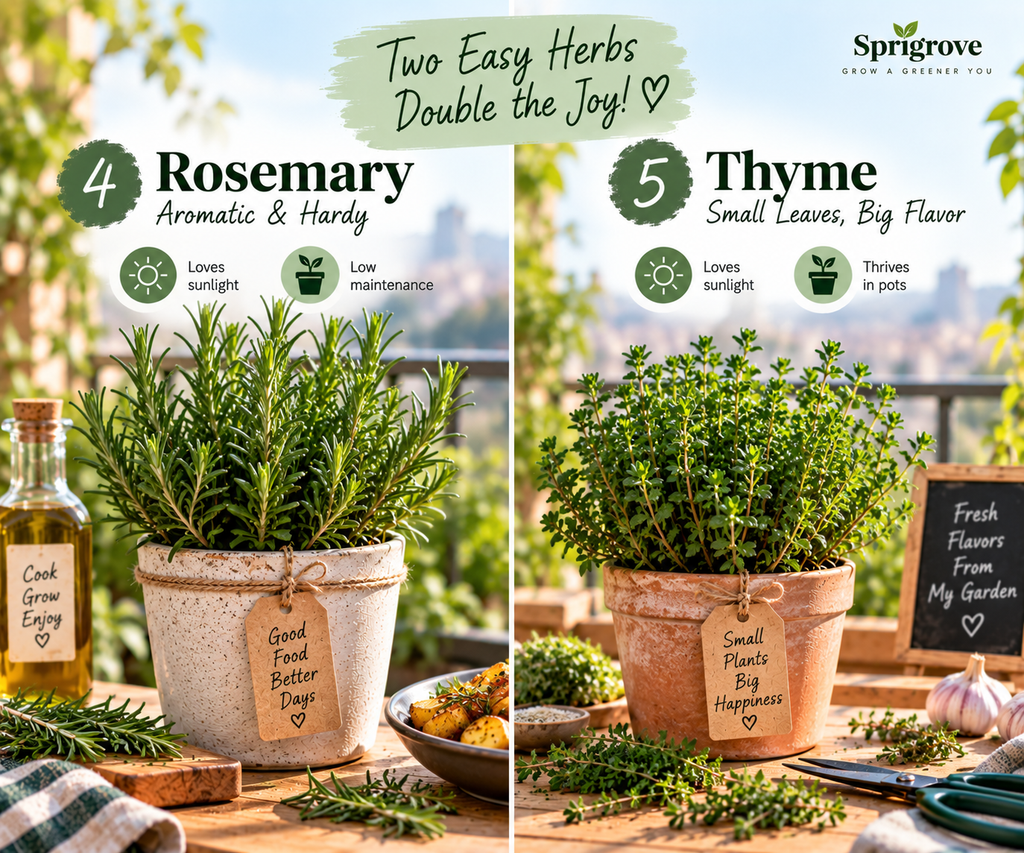
7. Thyme
Thyme is a compact herb that works especially well in containers.
It prefers plenty of sunlight and soil that drains well. Because thyme doesn’t like constantly wet roots, avoid overwatering.
Small, regular harvests can encourage fresh growth.
Best for: Meat, vegetables, soups, and roasted dishes.
8. Oregano
Oregano is another excellent choice for container gardening.
It enjoys plenty of sunlight and generally prefers a well-drained growing medium. Once established, oregano can provide fresh leaves for cooking throughout the growing season.
Harvest stems regularly to keep the plant compact and productive.
Best for: Pizza, pasta, sauces, and Mediterranean dishes.
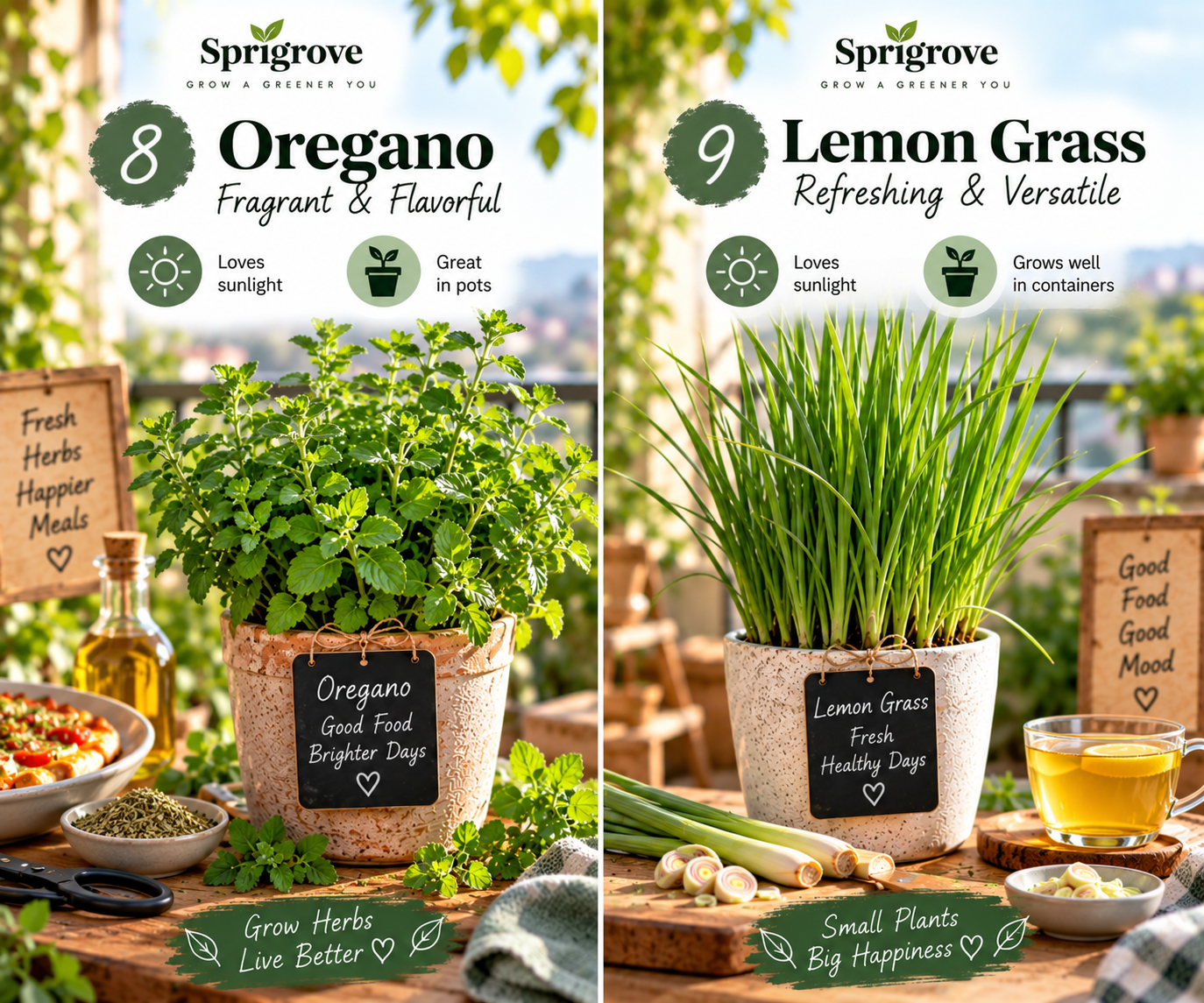
9. Lemongrass
Lemongrass adds a different texture and flavor to a home herb garden.
It grows best in warm conditions with plenty of sunlight and adequate moisture. A reasonably large container gives the plant room to develop.
In cooler climates, containers also make it easier to move the plant to a protected location when temperatures drop.
Best for: Tea, soups, curries, and Asian-inspired dishes.
10. Sage
Sage is a flavorful herb with attractive gray-green leaves.
It prefers sunlight and well-drained soil and generally doesn’t need frequent watering once established.
Avoid keeping the roots constantly wet, particularly when growing sage in containers.
Best for: Stuffing, roasted foods, sauces, and seasoning.
How to Choose the Right Herbs for Your Space
You don’t need to grow all ten herbs at once.
Start with herbs that match your available space and cooking habits.
For a Sunny Balcony
Try:
- Basil
- Rosemary
- Thyme
- Oregano
- Sage
For a Small Container Garden
Good choices include:
- Chives
- Parsley
- Thyme
- Basil
- Mint
For a Kitchen Windowsill
Depending on the available light, you can try:
- Basil
- Chives
- Parsley
- Mint
Remember that indoor herbs still need sufficient light to grow well.
How Much Sunlight Do Herbs Need?
Different herbs have different requirements, but many popular culinary herbs grow best with several hours of good sunlight each day.
Before placing containers, watch your space during the day and identify where sunlight is strongest.
If your herbs become unusually tall, weak, or pale, insufficient light may be one possible cause.
Watering Your Herb Garden
Avoid watering herbs according to a fixed schedule without checking the soil.
Instead, check the growing medium and water when the plant needs it.
Container herbs can dry out more quickly than herbs planted in the ground, especially during hot weather.
At the same time, constantly wet soil can cause root problems for herbs such as rosemary, thyme, oregano, and sage.
Good drainage is just as important as watering.
Harvest Herbs the Right Way
Regular harvesting can help many herbs remain productive.
Use clean scissors or garden snips and avoid removing a large portion of the plant at one time.
For leafy herbs such as basil and mint, harvest healthy stems rather than repeatedly removing individual leaves from random areas.
For woody herbs such as rosemary and thyme, take small amounts from the growing tips while leaving enough healthy growth on the plant.
Common Herb-Growing Mistakes
Overwatering
More water doesn’t always mean healthier herbs. Check the soil before watering.
Poor Drainage
Containers need drainage holes so excess water can escape.
Not Enough Light
Many culinary herbs need plenty of sunlight for strong growth and good flavor.
Planting Mint Without Containing It
Mint can spread quickly, so containers are often a practical choice.
Harvesting Too Much
Removing too much foliage at once can weaken a young plant.
Using Containers That Are Too Small
Restricted roots can limit growth and cause the soil to dry out quickly.
Start Your Herb Garden Small
You don’t need a dozen containers to get started.
Choose three or four herbs that you actually use in your kitchen and learn how they respond to your growing conditions.
Once you’re comfortable caring for them, you can gradually add more varieties.
Final Thoughts
The best herbs to grow at home are the ones that fit your space, climate, and cooking habits.
Basil, mint, coriander, parsley, chives, rosemary, thyme, oregano, lemongrass, and sage all offer something different and can be grown successfully with the right basic care.
Start small, provide suitable light and drainage, water according to the plant’s needs, and harvest regularly.
With just a few containers, you can create a productive herb garden and enjoy fresh flavors right outside your kitchen. 🌿