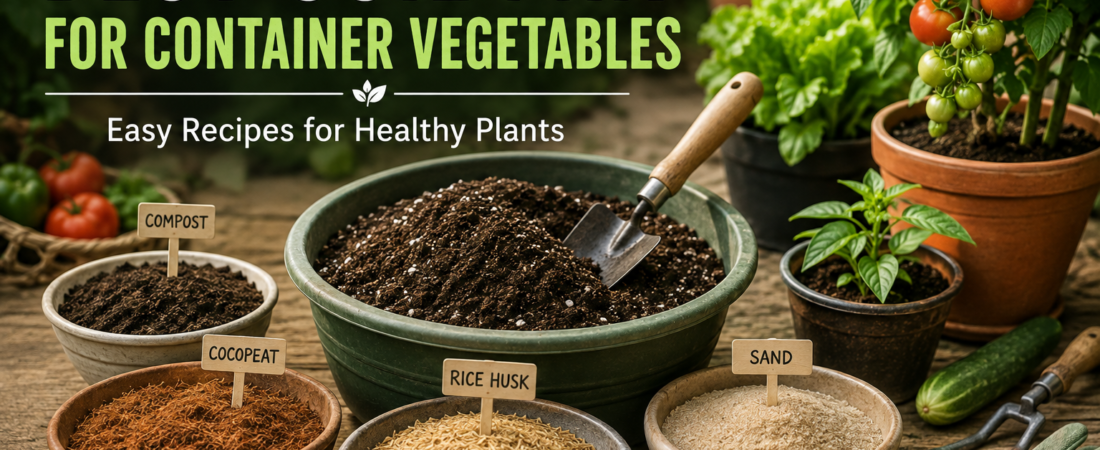
Growing vegetables in containers is convenient, but the soil inside a pot has a much bigger job than ordinary garden soil. The right soil mix for container vegetables needs to support roots, hold enough moisture, drain excess water, and provide a healthy environment for plants to grow.
The right soil mix for container vegetables can make a noticeable difference in plant health, especially when growing tomatoes, peppers, cucumbers, leafy greens, and root vegetables in pots.
You don’t necessarily need an expensive commercial mix. With the right ingredients and proportions, you can create a practical growing medium at home.
Why Container Soil Needs to Be Different
Garden soil can work well in the ground because it has a large volume of surrounding soil, natural drainage, and space for roots to spread.
A container is different.
When ordinary garden soil is placed in a pot, it can become compacted and restrict air and water movement around the roots. A good container mix should therefore remain loose enough for roots to breathe while still holding the moisture plants need.
The goal is not simply to make the soil rich. The goal is to create a balanced growing environment for the roots.
What Makes a Good Container Soil Mix?
A useful container mix generally needs four important characteristics:
- Moisture retention — enough to prevent plants from drying too quickly
- Drainage — excess water needs somewhere to escape
- Air space — roots need oxygen
- Organic matter — provides structure and contributes nutrients as it breaks down
Different vegetables may prefer slightly different conditions, but these basic principles apply to most container gardens.
A Simple All-Purpose Container Mix
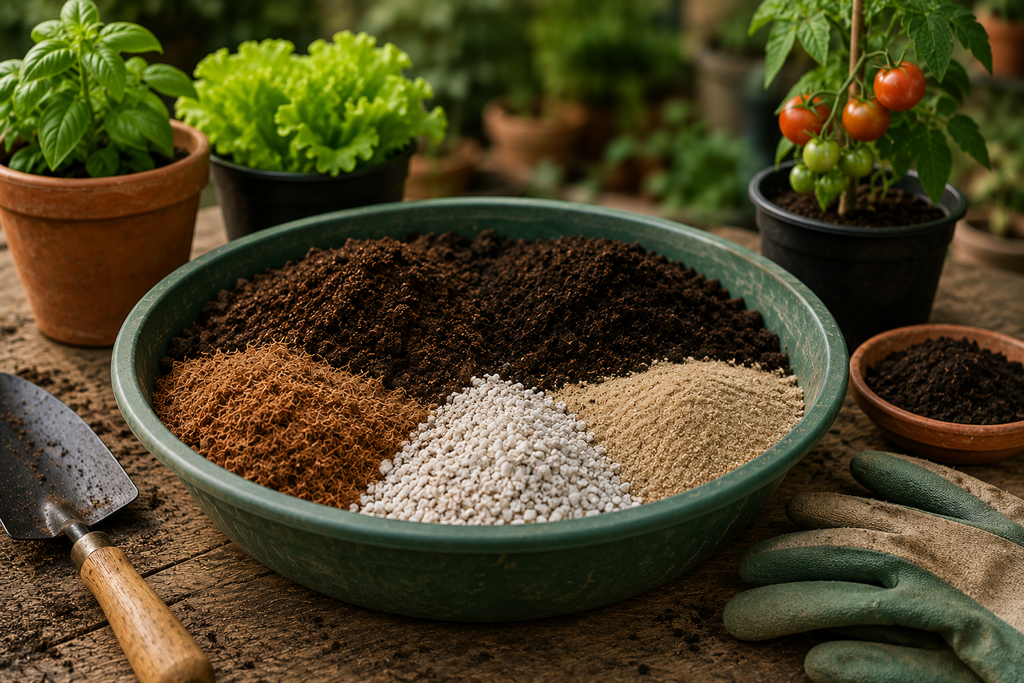
For many vegetables, you can start with a simple balanced mixture.
Basic Recipe
- 40% quality garden soil or clean topsoil
- 30% mature compost
- 20% rice husk, cocopeat, or another material that improves structure
- 10% coarse sand or another suitable drainage material
Mix everything thoroughly before filling your containers.
The exact proportions don’t have to be perfect. The important thing is to avoid creating a mixture that is extremely heavy, compacted, or poorly drained.
Tip: If your local soil is already very heavy clay, use less of it and increase the amount of compost and a suitable aerating material.
What Does Each Ingredient Do?
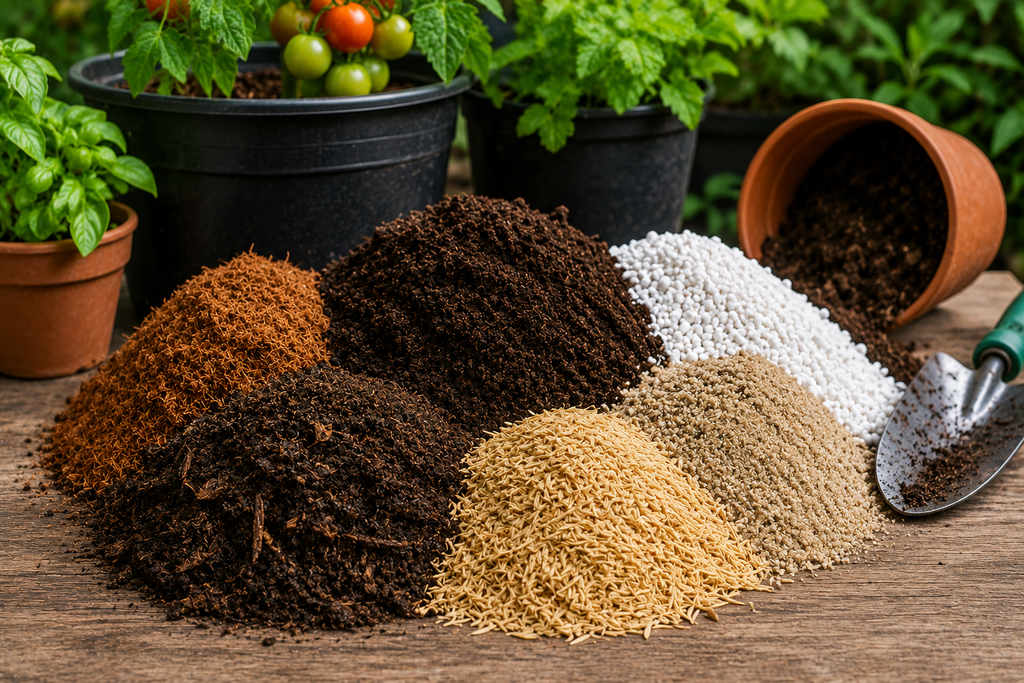
Garden Soil
Garden soil provides minerals and physical structure, but it can become heavy inside containers.
If you’re using soil from the ground, make sure it is reasonably clean and free from weeds, large roots, stones, and obvious pests.
Compost
Mature compost improves organic matter and helps support biological activity in the growing medium.
Use well-decomposed compost, not fresh kitchen scraps or unfinished compost directly around plant roots.
Too much unfinished organic material can create problems with odor, moisture, and plant growth.
Cocopeat
Cocopeat can help hold moisture while keeping the growing medium relatively light.
It can be useful for gardeners who need better moisture retention.
However, cocopeat isn’t essential. Depending on what’s available locally, you can use other suitable materials to improve the structure of the mix.
Rice Husk
Rice husk can be useful for improving the physical structure of a container mix.
It can help create additional air spaces and reduce the tendency of the medium to become overly compact.
For small-space gardeners, it can be a practical alternative when available.
Sand
Coarse sand can help improve drainage and add weight to the mixture.
Avoid using very fine sand in large quantities because it can make the growing medium heavier rather than improving drainage.
Best Soil Mix for Tomatoes
Tomatoes are heavy-feeding plants and can become quite large in containers.
They benefit from a growing medium that provides good drainage while retaining enough moisture to support consistent growth.
Simple Tomato Mix
Try:
- 40% quality soil
- 30% mature compost
- 20% cocopeat or rice husk
- 10% coarse sand
A large container is also important because a healthy tomato plant needs sufficient root space.
As the plant grows, regular feeding becomes more important than simply adding large amounts of fertilizer to the initial mix.
Best Soil Mix for Cucumbers
Cucumbers grow quickly and can use significant amounts of water.
Their container mix should hold moisture but still drain excess water.
A practical mixture can include:
- 40% quality soil
- 30% mature compost
- 20% cocopeat or another moisture-retaining material
- 10% coarse sand or another drainage-supporting material
Because cucumbers can become vigorous vines, choose a container large enough for the root system and provide suitable support for the vines.
Best Soil Mix for Peppers and Chilies
Peppers and chilies prefer a loose growing medium with good drainage.
A simple mix can include:
- 40% soil
- 30% mature compost
- 20% rice husk or cocopeat
- 10% coarse sand
Avoid keeping pepper containers constantly waterlogged.
Consistent moisture is useful, but excess water around the roots can cause problems.
Best Soil Mix for Leafy Vegetables
Leafy vegetables such as spinach and lettuce generally don’t need the same deep containers as large fruiting plants.
For these crops, a lighter mix can be useful.
Try:
- 35% soil
- 35% mature compost
- 20% cocopeat or rice husk
- 10% coarse sand
The shallow root systems of many leafy vegetables make good drainage and consistent moisture particularly important.
Best Soil Mix for Root Vegetables
Carrots, radishes, and similar crops need a growing medium that allows their roots to expand.
For root vegetables, avoid large pieces of undecomposed organic matter, stones, or compacted soil.
A loose mix can include:
- 40% fine soil
- 25% mature compost
- 25% cocopeat or another light structural material
- 10% coarse sand
The container should also be deep enough for the mature root length of the particular variety.
How to Improve Heavy Clay Soil
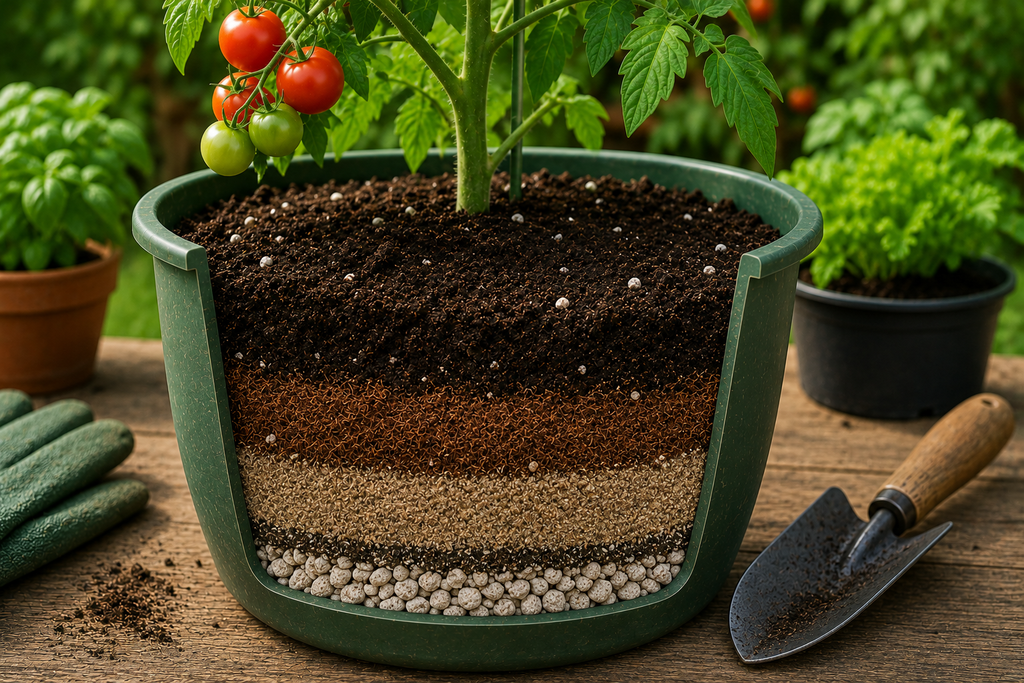
If the soil available to you is heavy clay, don’t simply fill a container with it.
Clay can become dense and restrict drainage.
Instead, combine a smaller amount of clay soil with mature compost and materials that improve the physical structure of the mix.
Mix thoroughly rather than creating separate layers of different materials.
Important: Don’t put a thick layer of gravel at the bottom of a container as a substitute for proper drainage. The drainage holes and the overall structure of the growing medium are more important.
How to Make Your Container Mix More Fertile
A good soil structure is only one part of successful container gardening.
Plants also need nutrients as they grow.
Start with mature compost, then monitor your plants over time.
If growth becomes weak or leaves show signs of nutrient deficiency, use an appropriate fertilizer rather than continuously adding large amounts of compost.
Homemade Organic Options
Depending on what is available, gardeners may use properly composted:
- Vegetable and fruit scraps
- Dry leaves
- Well-decomposed plant material
- Aged organic matter
The key word is composted.
Fresh kitchen waste should not simply be buried in a plant pot and treated as fertilizer.
How to Reuse Old Container Soil
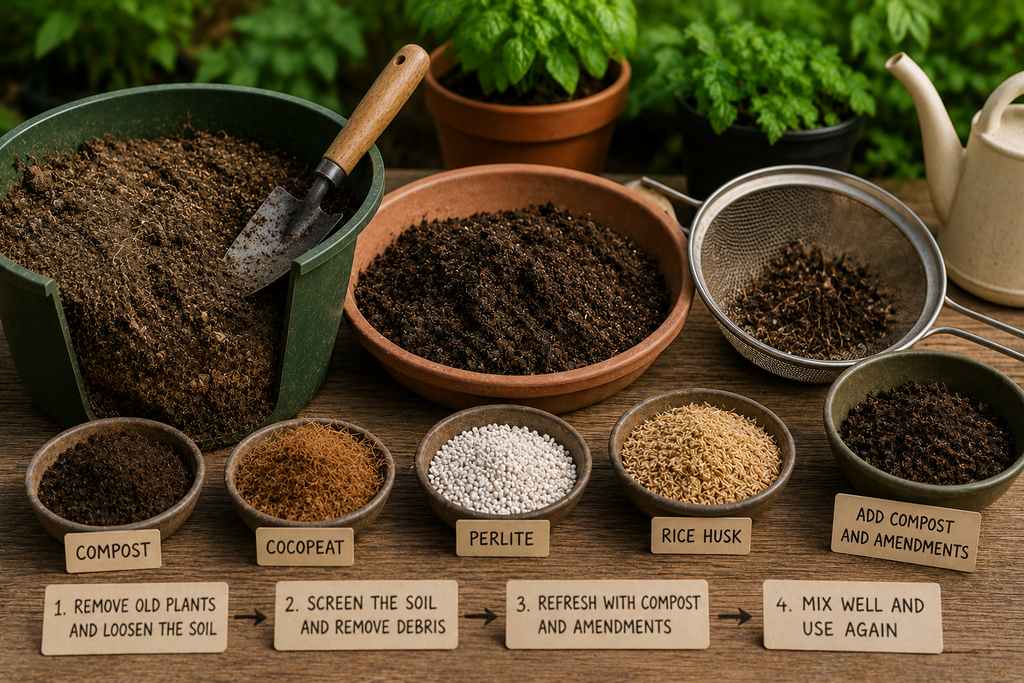
Old container soil doesn’t always need to be thrown away.
After a growing season, remove old roots and plant debris and inspect the soil.
If it still has reasonable structure, you can refresh it by mixing in mature compost and other materials needed to restore its texture.
However, avoid repeatedly growing the same crop family in the same exhausted medium without refreshing it properly.
When Should You Replace Container Soil?
You may need to replace or substantially refresh the growing medium when:
- It has become severely compacted
- Drainage has become poor
- It has a persistent unpleasant smell
- The soil structure has broken down
- Plants repeatedly struggle despite appropriate care
- The container has had serious pest or disease problems
Healthy soil doesn’t have to be replaced automatically every season.
Sometimes refreshing and rebuilding the mix is enough.
Common Soil-Mix Mistakes
Using Too Much Garden Soil
Too much heavy soil can make containers dense and difficult to drain.
Adding Too Much Compost
More compost isn’t always better.
Excess organic material can change moisture behavior and nutrient availability.
Using Fresh Manure
Fresh manure can be too strong for plant roots and may contain unwanted pathogens or weed seeds.
Use properly aged or composted material instead.
Ignoring Drainage
Even an excellent soil recipe can fail if the container has no proper drainage holes.
Making Every Container Mix Identical
Tomatoes, lettuce, carrots, and cucumbers don’t have exactly the same root systems or growing habits.
Start with a general mix and adjust based on the plant.
How to Test Your Soil Mix Before Planting
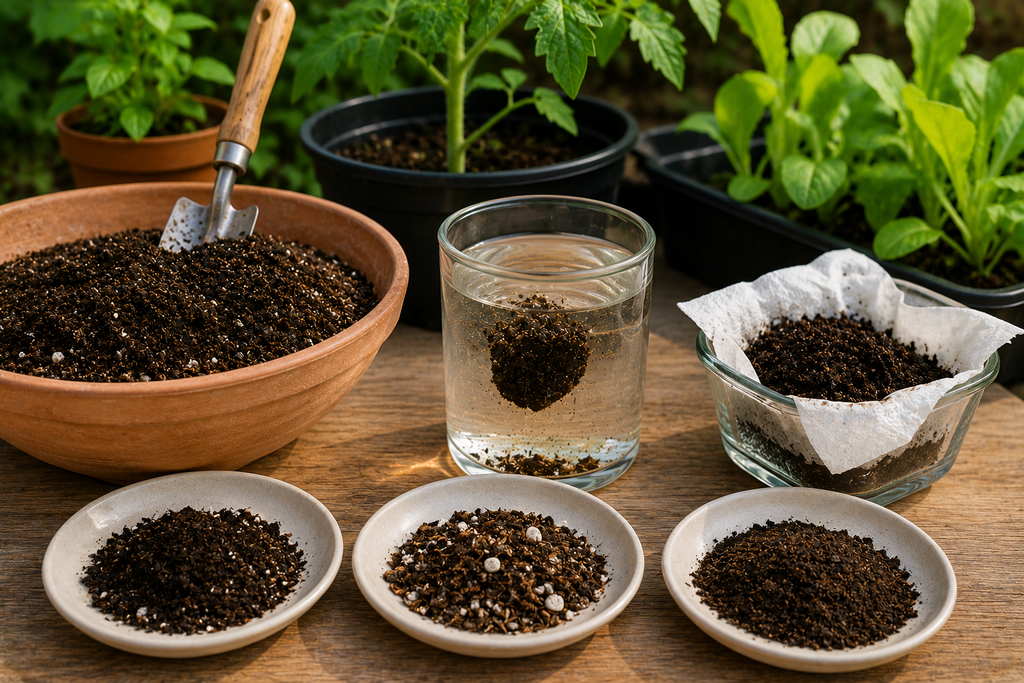
Before filling all your containers, test a small batch.
Add water and observe how quickly it moves through the mixture.
A good mix should absorb some moisture while allowing excess water to drain away.
Then squeeze a handful of the damp mix.
It should hold together slightly but should not form a hard, sticky lump.
If it becomes extremely muddy, improve drainage and structure.
If it dries out immediately and refuses to hold moisture, add an appropriate moisture-retaining component.
Refreshing Your Soil Between Crops
After harvesting a crop, don’t simply add fertilizer and plant again immediately.
First:
- Remove old roots and plant debris.
- Loosen compacted areas.
- Add mature compost.
- Add structural material if the mix has become heavy.
- Check drainage holes.
- Mix everything thoroughly.
- Refill the container if the soil level has dropped.
This simple routine can keep your container garden productive for longer.
Final Thoughts
The best soil mix for container vegetables isn’t necessarily the most complicated recipe.
Healthy container soil needs the right balance of moisture, drainage, air space, organic matter, and root support.
Start with a simple mixture, observe how your plants respond, and make adjustments based on your climate, containers, and available materials.
Once you learn how different ingredients affect your growing medium, you can create better mixes for tomatoes, cucumbers, peppers, leafy greens, root vegetables, and many other crops.
Good plants start with healthy roots—and healthy roots start with a growing environment that gives them room to breathe, absorb water, and grow. 🌱