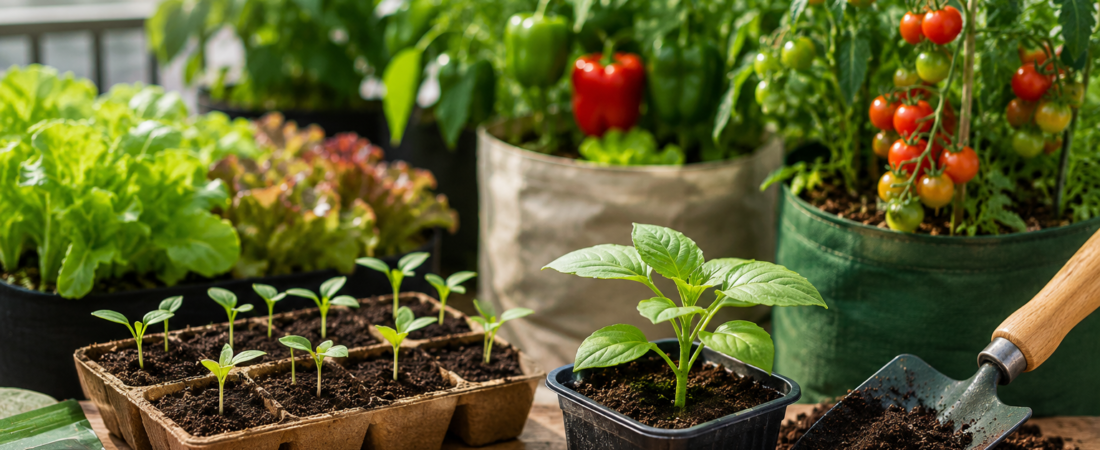
Starting a vegetable garden from seed can feel intimidating when you’re new to gardening. You might wonder how deep to plant the seeds, how often to water them, or when those tiny seedlings are ready for a bigger container.
The good news is that you don’t need a large garden or expensive equipment to get started. With the right containers, growing medium, light, water, and a little patience, you can grow vegetables from seeds even in a small space.
With the right containers, growing medium, light, water, and a little patience, you can grow vegetables from seeds even in a small space.
Why Start Vegetables From Seeds?
When you grow vegetables from seeds, you get to experience the entire growing process from germination to harvest.
Instead of buying a mature plant, you get to watch the first tiny shoot emerge from the soil and gradually develop into a healthy vegetable plant.
Seeds are also easy to store, inexpensive, and available in a wide range of varieties.
For small-space gardeners, starting a few plants from seed can be an enjoyable way to experiment without needing a large collection of containers.
1. Choose Vegetables That Are Beginner-Friendly
Not every vegetable is equally easy to start from seed.
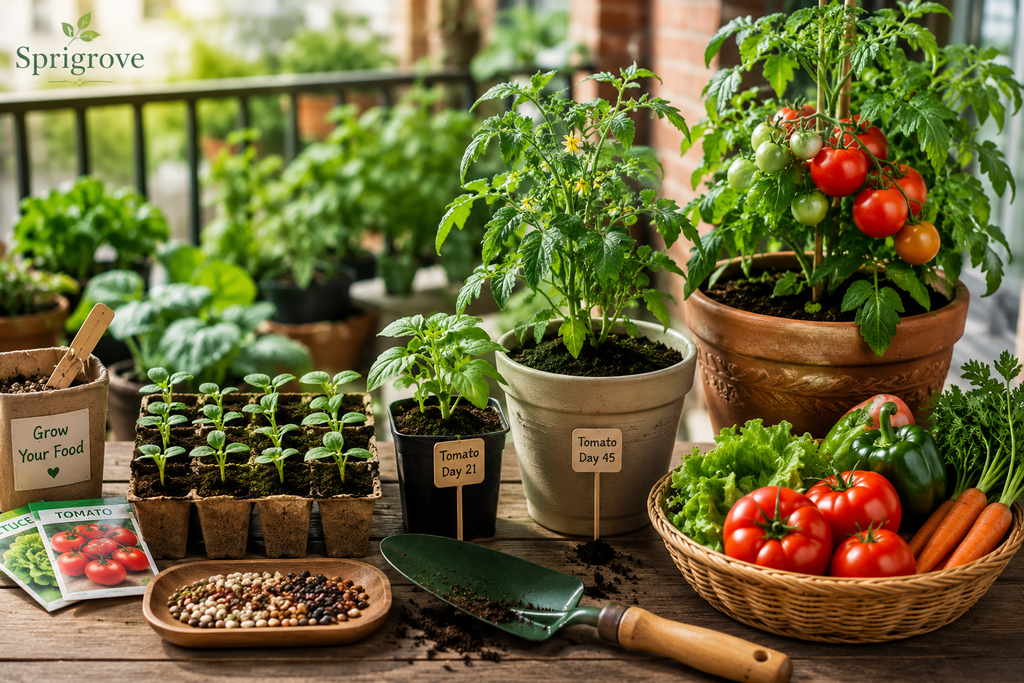
If you’re new to seed starting, begin with vegetables that generally germinate readily and don’t require complicated care.
Good options can include:
- Radishes
- Lettuce
- Spinach
- Green onions
- Peas
- Beans
- Carrots
- Some varieties of tomatoes and peppers
Choose varieties that match your growing conditions and the space available to you.
Beginner tip: Read the seed packet before planting. It will usually provide important information about planting depth, spacing, sunlight, and expected days to maturity.
2. Choose the Right Containers
You don’t need expensive seed-starting equipment.
Small pots, seed trays, recycled containers, or other suitable planting containers can work as long as they are clean and provide adequate drainage.
The container should allow excess water to escape. Without drainage, the growing medium can remain too wet and create problems for developing roots.
For very small seeds, shallow containers can be convenient during the early stage.
Beginner tip: If you’re reusing a container, clean it thoroughly before planting new seeds.
3. Use a Suitable Growing Medium
Seeds need a growing medium that provides moisture while still allowing air to reach the developing roots.
A heavy or compacted medium can make germination and early growth more difficult.
For seed starting, use a fine, loose growing medium that drains well and doesn’t form a hard crust on the surface.
You don’t need to pack the medium tightly into the container. Fill the container gently and leave enough room for watering.
Beginner tip: Avoid using compacted soil straight from the ground for delicate seedlings.
4. Plant Seeds at the Right Depth
Planting depth matters.
Seeds that are buried too deeply may struggle to reach the surface, while seeds planted too shallowly can dry out or become exposed.
Different vegetables have different requirements, so always check the instructions on the seed packet.
As a general rule, smaller seeds are often planted more shallowly than larger seeds.
Beginner tip: Don’t assume every seed should be planted at the same depth. The seed packet is your best starting reference.
5. Water Gently
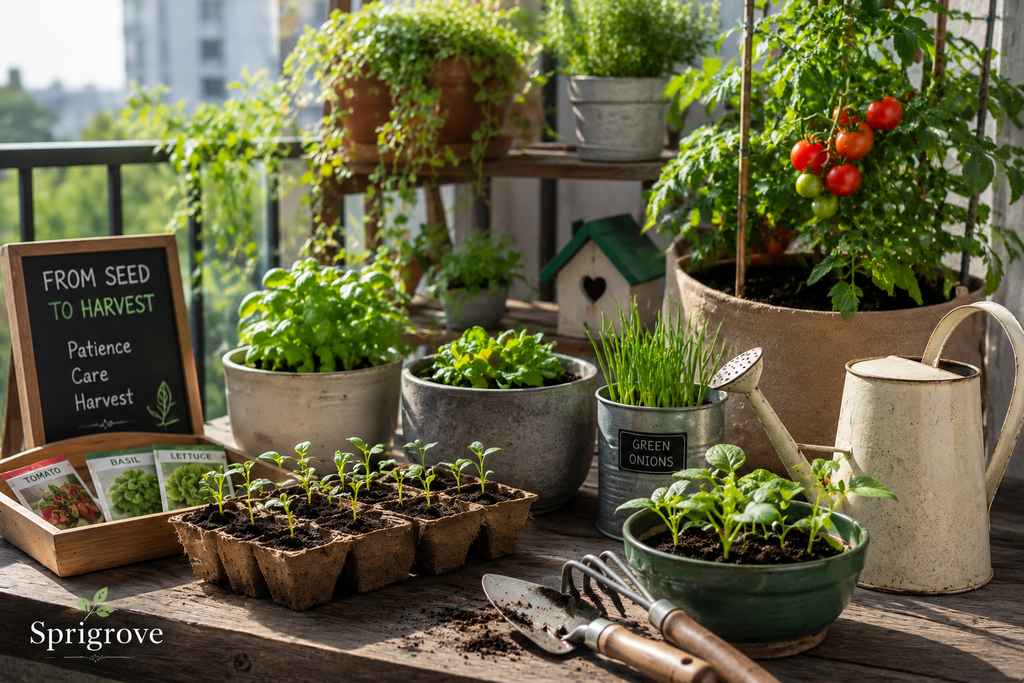
Watering is one of the most important parts of seed starting.
A strong stream of water can disturb the seeds or wash them into one corner of the container.
Instead, use a gentle watering method that moistens the growing medium without disturbing the surface.
The goal is to keep the growing medium appropriately moist without leaving it constantly saturated.
Beginner tip: Check the container regularly rather than following a rigid watering schedule.
6. Give Seedlings Enough Light
Once seeds germinate, light becomes extremely important.
Young seedlings need enough light to develop strong, healthy growth. When light is insufficient, seedlings can become tall, thin, and weak as they stretch toward a light source.
A bright location with suitable sunlight can help seedlings develop more naturally.
If you’re growing indoors, make sure the location provides adequate light for the specific plants you’re growing.
Beginner tip: Rotate containers occasionally if seedlings are leaning strongly toward one direction of light.
7. Don’t Overcrowd Your Seedlings
It can be exciting when many seeds germinate, but too many seedlings in one small container can quickly become crowded.
Overcrowding creates competition for light, water, nutrients, and root space.
Once seedlings are large enough to handle, they may need to be thinned or separated.
Beginner tip: Don’t feel bad about removing weaker seedlings. Giving the strongest plants enough space can produce healthier plants.
8. Know When to Transplant
Some vegetables can remain in their original container, while others eventually need more room.
If roots begin filling the container or seedlings have developed several healthy leaves, it may be time to move them into a larger pot.
Transplant carefully and avoid damaging the young root system.
Water the plant after transplanting and give it suitable conditions while it adjusts.
Beginner tip: Handle seedlings by their leaves when possible rather than pulling or squeezing the delicate stem.
9. Harden Off Young Plants
If you’ve started seedlings indoors and plan to move them outside, don’t immediately place them in harsh outdoor conditions for an entire day.
Young plants need time to adjust to stronger sunlight, wind, and changing temperatures.
Gradually introduce them to outdoor conditions over several days.
This process helps reduce transplant shock.
Beginner tip: Start with shorter periods outdoors in a sheltered location and gradually increase exposure.
10. Label Everything
When several varieties are growing together, it can become surprisingly easy to forget which seed is which.
Small labels can save you from guessing later.
Write down the vegetable name and, if useful, the planting date or variety.
This information can also help you learn which varieties perform best in your growing conditions.
Beginner tip: Keep a simple gardening notebook or phone note with planting dates and observations.
11. Give Each Plant Enough Space
Once seedlings become established, their spacing becomes increasingly important.
Plants that are too close together compete for resources and can create crowded foliage.
The correct spacing depends on the vegetable and variety, so follow the recommended spacing on the seed packet whenever possible.
Remember that the plant you see today may become much larger over the next few weeks.
Beginner tip: Plan spacing based on the mature plant, not the size of the seedling.
12. Be Patient
One of the hardest parts of starting vegetables from seed is simply waiting.
Some seeds germinate quickly, while others take longer. Temperature, moisture, light, seed quality, and growing conditions can all influence how quickly plants emerge.
Don’t assume a seed has failed just because you don’t see growth immediately.
Give it the conditions it needs and allow enough time for germination.
Beginner tip: Keep track of when you planted each variety so you know when to start investigating if germination takes unusually long.
Common Seed-Starting Problems
Seeds Aren’t Germinating
Check the planting depth, moisture, temperature, and seed age.
If the growing medium is too dry or too wet, germination can suffer. Seeds that are planted too deeply may also struggle to emerge.
Seedlings Are Tall and Weak
This is often a sign that seedlings aren’t receiving enough suitable light.
Move them to a brighter location if possible and make sure they aren’t competing heavily with neighboring seedlings.
Seedlings Are Falling Over
Very young seedlings that suddenly collapse may have problems related to excessive moisture, poor airflow, or unsuitable growing conditions.
Avoid keeping the growing medium constantly saturated and provide appropriate airflow around young plants.
Leaves Are Turning Yellow
Yellowing can have several possible causes, including watering problems, poor growing conditions, nutrient issues, or root stress.
Don’t immediately add fertilizer. First check the basics: moisture, drainage, light, and container conditions.
How to Grow Vegetables From Seeds to Harvest
Starting a vegetable from seed is only the beginning.
As the plant grows, its needs will change. A tiny seedling may need only a small container, while a mature tomato or pepper plant may require much more root space.
You may also need to provide support, adjust watering, feed the plant, or protect it from pests.
This is where paying attention becomes more important than following a fixed routine.
Watch how your plants respond and make small adjustments as they grow.
Keep Notes for Your Next Planting
One of the best ways to become a better gardener is to learn from your own garden.
Write down which vegetables germinated quickly, which struggled, how much sunlight they received, and which varieties eventually produced the best harvest.
Next season, you’ll have your own growing record to guide you.
Over time, these notes can become more useful than a generic gardening calendar because they reflect the conditions of your own space.
Final Thoughts
You don’t need a large garden or years of experience to start vegetables from seed.
Choose beginner-friendly crops, use suitable containers and growing media, provide appropriate moisture and light, and give your seedlings enough room to develop.
Most importantly, don’t expect every seed to grow perfectly the first time.
Once you learn how to grow vegetables from seeds, you can experiment with different crops and varieties in your own garden.
Start with a few seeds, give them the care they need, and enjoy watching your garden grow from the very beginning. 🌱