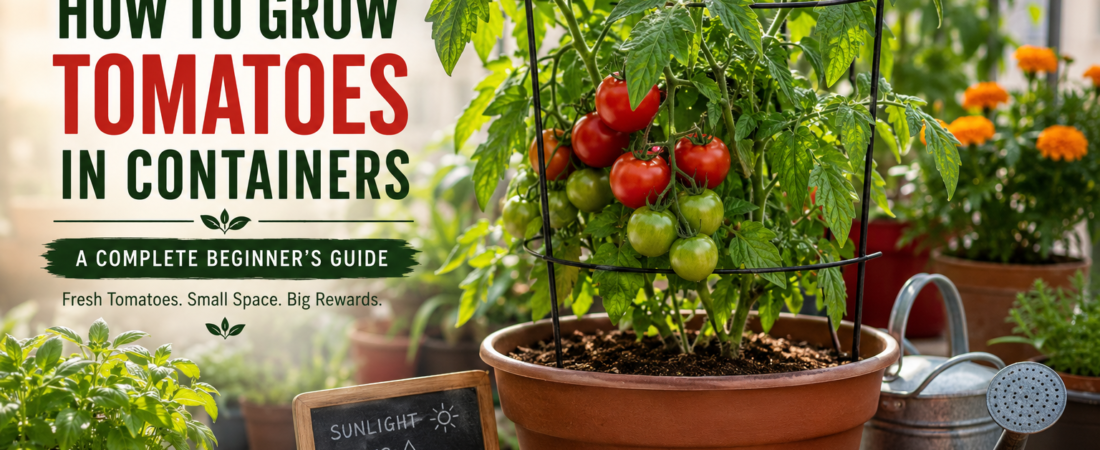
Learning how to grow tomatoes in containers is a great option if you don’t have a large garden. A sunny balcony, patio, terrace, or small outdoor space can provide enough room for a productive tomato plant when you choose the right variety and give it the care it needs.
If you’re learning how to grow tomatoes in containers, the most important things to get right are the variety, container, soil, sunlight, watering, support, and feeding. Once these basics are under control, growing tomatoes becomes much easier.
Why Grow Tomatoes in Containers?
How to grow tomatoes in containers
Additionally, tomatoes are among the most rewarding vegetables to grow at home because they produce visible fruit and offer a sense of accomplishment as you observe the plants thrive through the season. This experience can motivate beginners to learn more about soil, watering, and care, while also providing a tasty harvest.
Moreover, even one healthy tomato plant can yield a useful harvest during the growing season, providing fresh fruit for meals, experiments in flavor, and a rewarding handling of garden crops from the planting to the harvest stage.
Container gardening also gives you more control over the growing environment. You can choose the soil, monitor moisture, move the container when necessary, and grow varieties suited to your available space.
For beginners, containers also make it easier to observe the plant and notice changes in its leaves, flowers, and fruit.
1. Choose the Right Tomato Variety
Not all tomato plants grow the same way.
For containers, look for varieties described as:
- Patio
- Dwarf
- Bush
- Compact
- Determinate
These varieties are often easier to manage in limited spaces.
Indeterminate tomatoes can also be grown in containers, but they usually produce longer vines and require stronger support.
Before buying seeds, check the mature size of the variety. A small seedling can eventually become a large plant.
2. Start Tomatoes From Seeds
Additionally, how to grow tomatoes in containers is an inexpensive way to produce several plants.
Plant seeds in a clean container filled with a suitable seed-starting medium. Keep the medium moist but not constantly saturated, and place the container somewhere warm and bright.
Once seedlings emerge, provide plenty of suitable light so they don’t become excessively tall and weak.
When the seedlings develop several healthy leaves and a stronger root system, they can be transplanted into larger containers.
If you’re new to starting vegetables from seed, our guide on how to grow vegetables from seeds explains the process in more detail.
3. Choose the Right Container
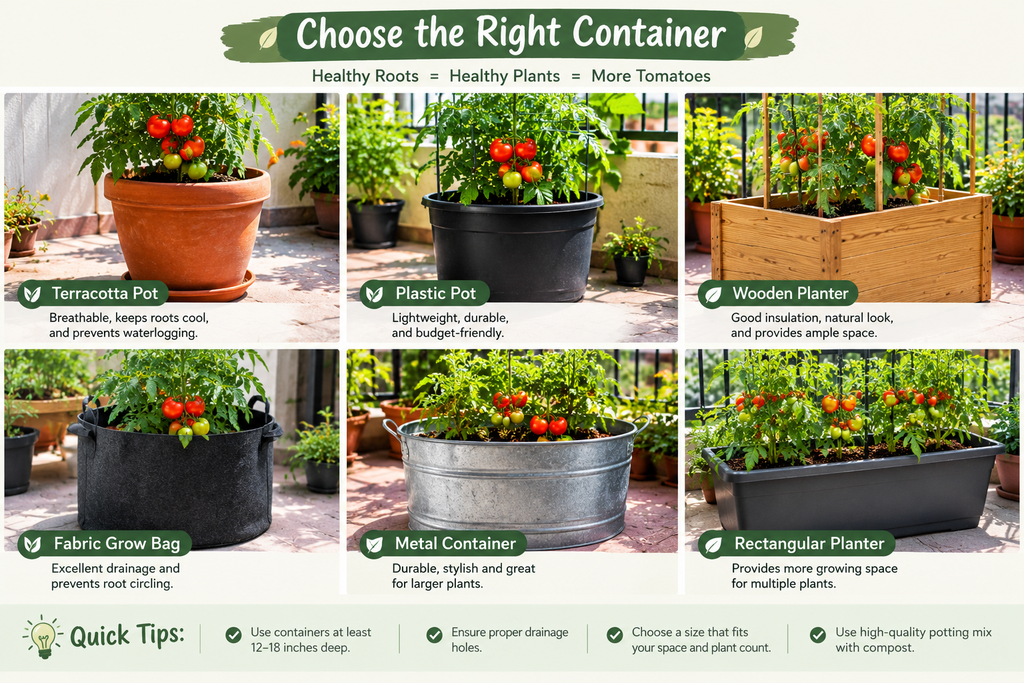
Container size has a major effect on tomato growth.
A very small container can restrict the roots and dry out quickly, particularly during hot weather.
Choose a container appropriate for the mature size of your tomato variety and make sure it has adequate drainage holes.
Larger containers generally provide more room for roots and more growing medium to hold moisture.
If your container is placed on a balcony or terrace, remember that a large pot filled with wet soil can become very heavy. Make sure the location and surface can safely support it.
4. Use a Good Soil Mix
Tomatoes need a growing medium that provides both moisture retention and good drainage.
Avoid using heavy, compacted soil that stays wet for long periods.
A suitable container mix should remain loose enough for roots to grow while still holding enough moisture for the plant.
Our guide to the best soil mix for container vegetables explains different ingredients and simple mix options in more detail.
The important thing is to start with healthy, well-structured growing media rather than trying to correct poor soil later.
5. Give Tomatoes Plenty of Sunlight
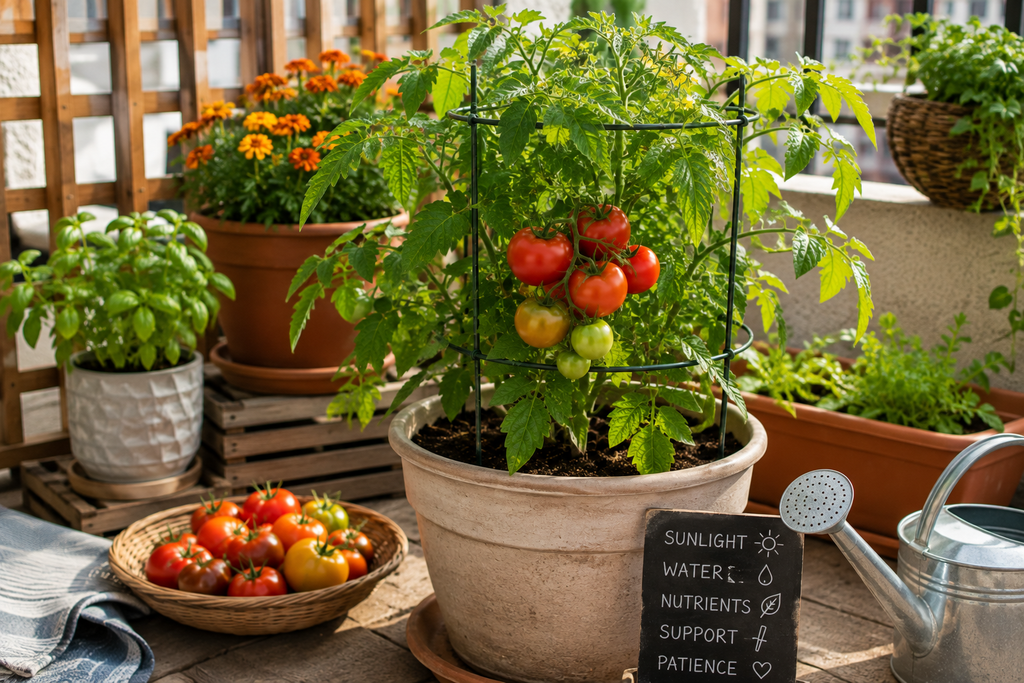
Tomatoes are sun-loving plants.
Additionally, place the container in a location that receives plenty of direct sunlight appropriate for your local growing conditions. This helps with how to grow tomatoes in containers.
Before choosing a permanent location, observe your balcony, terrace, or garden throughout the day. Nearby buildings, walls, trees, and railings can create more shade than you might expect.
Insufficient light can lead to weak growth and fewer flowers.
Tip: Don’t judge sunlight based only on how bright the area looks. Direct sunlight and bright shade are not the same thing.
6. Transplant Seedlings Carefully
When your tomato seedlings are ready for a larger container, transplant them carefully.
Prepare the new container before removing the seedling. Gently remove the plant while keeping the root ball as intact as possible.
Tomatoes have the useful ability to develop additional roots along buried portions of their stem, which can help create a stronger root system.
After transplanting, water the plant thoroughly and give it suitable light while it adjusts.
Avoid handling the stem roughly during the process.
7. Water Tomatoes Consistently
Proper watering is one of the most important parts of tomato care.
Check the growing medium regularly and water when the plant needs it rather than following a fixed schedule regardless of weather.
When watering, moisten the root zone thoroughly and allow excess water to drain through the container.
During hot or windy weather, container plants may dry out much faster.
Try to avoid repeatedly allowing the soil to become extremely dry and then soaking it heavily.
Consistent moisture is particularly important when plants are flowering and developing fruit.
8. Give the Plant Proper Support
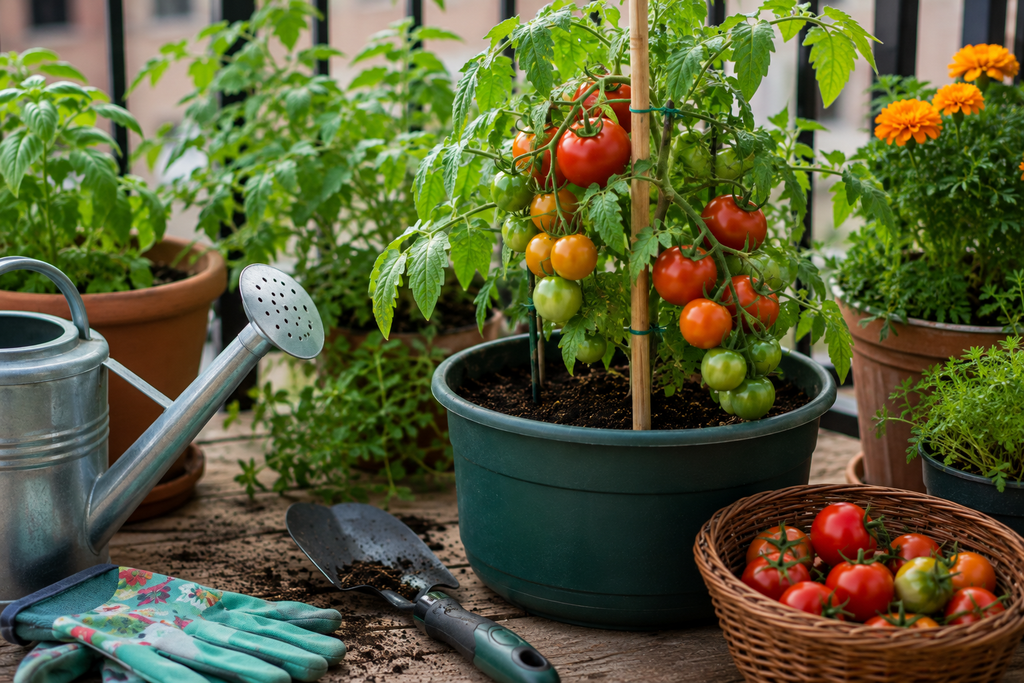
Tomato plants can become heavy as they grow and produce fruit.
Install a suitable stake, cage, or trellis before the plant becomes difficult to manage.
Supporting the plant can help keep stems upright and make harvesting easier.
Use soft garden ties and avoid tying them tightly around the stem.
For vigorous varieties, check the support regularly as the plant grows.
9. Prune Only When Necessary
Pruning requirements depend on the tomato variety.
Some compact and determinate tomatoes need very little pruning, while indeterminate varieties may benefit from removing selected unwanted shoots and maintaining a manageable structure.
Avoid aggressively removing healthy leaves.
Leaves are essential because they help the plant produce energy needed for growth and fruit development.
A better approach is to remove damaged, diseased, or clearly unwanted growth while maintaining a healthy canopy.
10. Encourage Healthy Flowering and Fruiting
Once flowers appear, the plant needs suitable sunlight, water, nutrients, and healthy growing conditions to develop fruit.
Avoid excessive nitrogen feeding because it can encourage lots of leafy growth without necessarily improving fruit production.
Consistent watering is also important. Large swings between very dry and very wet conditions can place unnecessary stress on the plant.
If your tomato is growing in a sheltered balcony with very little natural air movement, gentle movement of flowering branches can help distribute pollen within the flowers.
The biggest improvements in fruiting usually come from consistent basic care, rather than one special fertilizer or secret technique.
11. Feed Your Tomato Plant Properly
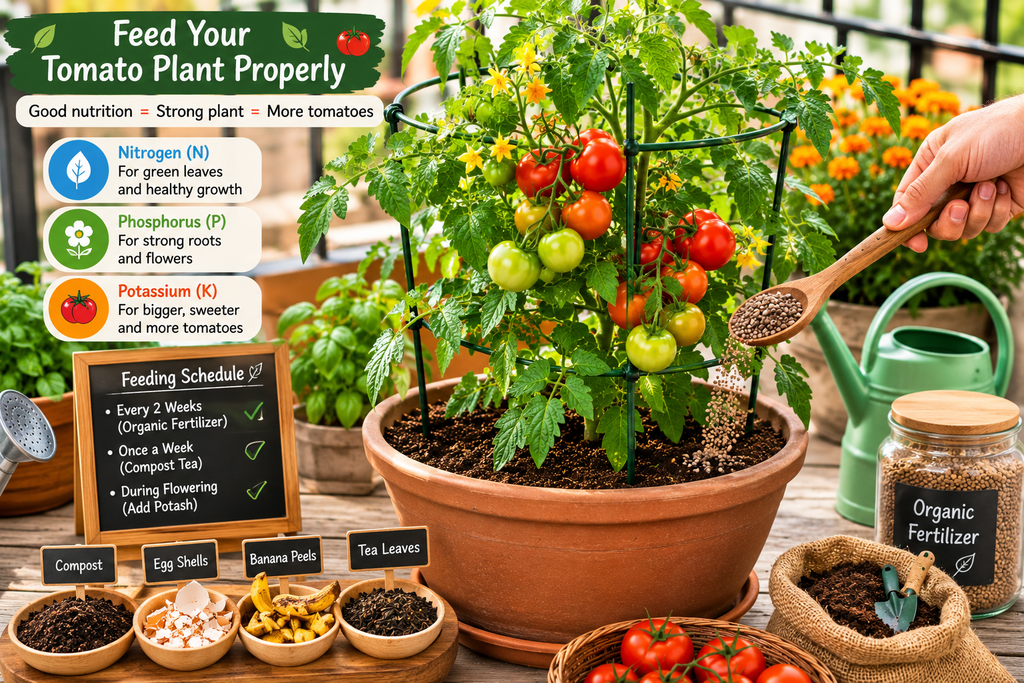
A tomato plant growing in a container has a limited amount of growing media available to it.
As the plant grows, nutrients can gradually become depleted.
Start with a healthy growing mix containing mature organic matter. As the plant develops, provide an appropriate fertilizer according to the product instructions or your chosen gardening method.
Avoid adding large amounts of fertilizer simply because the plant isn’t producing fruit yet.
Before increasing fertilizer, check:
- Sunlight
- Watering
- Container size
- Root health
- Flowering
- General plant condition
A healthy tomato plant needs balanced care rather than excessive feeding.
12. Protect the Soil Surface With Mulch
Mulching can be useful for container-grown tomatoes.
A suitable layer of organic mulch can reduce evaporation from the soil surface and help moderate rapid changes in moisture.
Clean, dry plant material can be used as mulch when appropriate.
Don’t pile mulch directly against the main stem, and avoid creating a constantly wet layer around the plant.
We’ll cover tomato mulching in much more detail in a dedicated guide later.
13. Watch for Pests and Plant Problems
Tomatoes can attract pests such as:
- Aphids
- Whiteflies
- Spider mites
- Caterpillars
- Thrips
Check the leaves regularly, especially their undersides.
Look for curling leaves, sticky residue, webbing, chewed foliage, discoloration, or tiny insects.
Early detection makes problems much easier to manage.
Tomatoes can also develop diseases and other problems related to moisture, airflow, environmental stress, or plant health.
Don’t immediately assume that every yellow leaf means the plant needs fertilizer. Check the basic growing conditions first.
Our future tomato pest-control guide will cover identification and practical control methods in greater detail.
14. Harvest Tomatoes at the Right Time
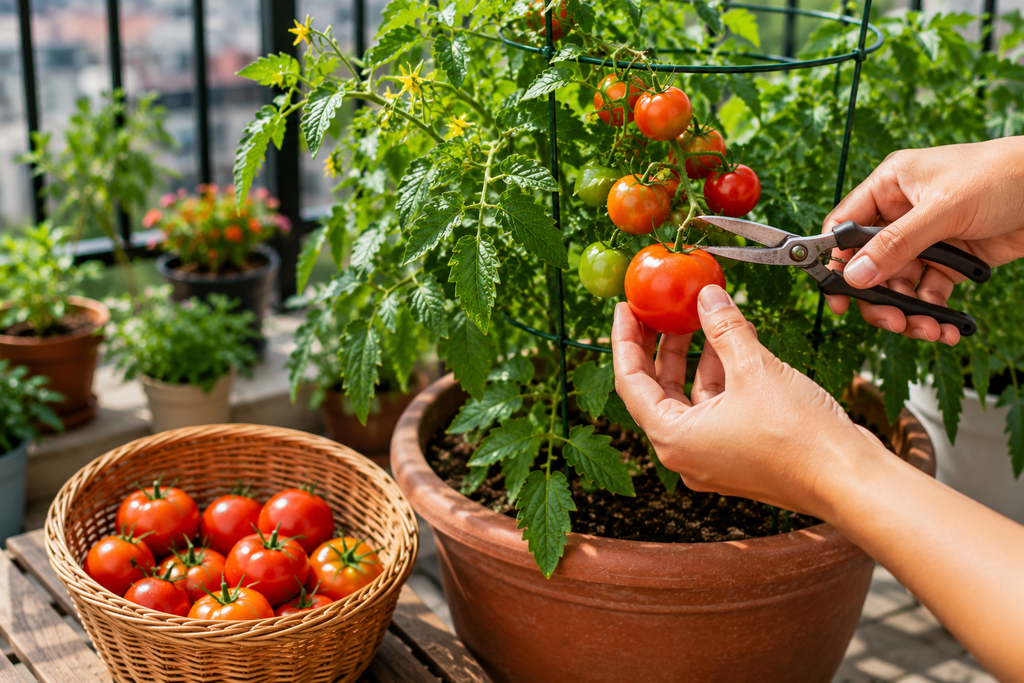
Harvesting depends on the variety and your preference.
Many tomatoes can be harvested when they begin changing color and allowed to finish ripening under suitable conditions.
Others can remain on the plant until fully ripe.
Handle the fruit gently during harvesting so you don’t damage the plant or nearby tomatoes.
Regular harvesting can also encourage continued production in some varieties.
Common Tomato Growing Mistakes
Using a Container That’s Too Small
Restricted roots can make it harder for the plant to maintain strong growth.
Poor Drainage
Excess water around the roots can cause serious problems.
Too Little Sunlight
Tomatoes need plenty of suitable light for healthy growth and fruit production.
Overwatering
Watering more frequently doesn’t necessarily produce healthier plants.
Excessive Fertilizer
More fertilizer isn’t always better. Too much can create imbalanced growth.
No Support
Waiting until a large tomato plant starts falling over can make supporting it much more difficult.
Over-pruning
Removing too many healthy leaves can reduce the plant’s ability to produce energy.
Ignoring Early Pest Problems
Regularly checking the plant can help you catch small problems before they become major infestations.
A Simple Tomato Care Routine
Once your tomato plant is established, you don’t need to spend hours caring for it every day.
Every few days
Check soil moisture and look over the leaves and stems.
Once a week
Check for pests, damaged leaves, new flowers, developing fruit, and support requirements.
Throughout the growing season
Maintain appropriate watering, provide suitable feeding, keep the plant supported, and harvest ripe tomatoes regularly.
A few minutes of observation can make a big difference.
Final Thoughts
Learning how to grow tomatoes in containers doesn’t require a large garden or expensive equipment.
Choose a suitable variety, provide enough root space, use a healthy growing medium, give the plant plenty of sunlight, and maintain consistent watering.
As the plant develops, add support, prune only when necessary, provide appropriate nutrition, and regularly check for pests and other problems.
Don’t worry if your first tomato plant isn’t perfect. Every growing season teaches you more about your space, climate, containers, and the varieties that perform best.
These simple steps make how to grow tomatoes in containers much easier for beginners, even when growing space is limited.🍅🌱